Vastu Basics
Why the North-East Corner Matters Most in Vastu

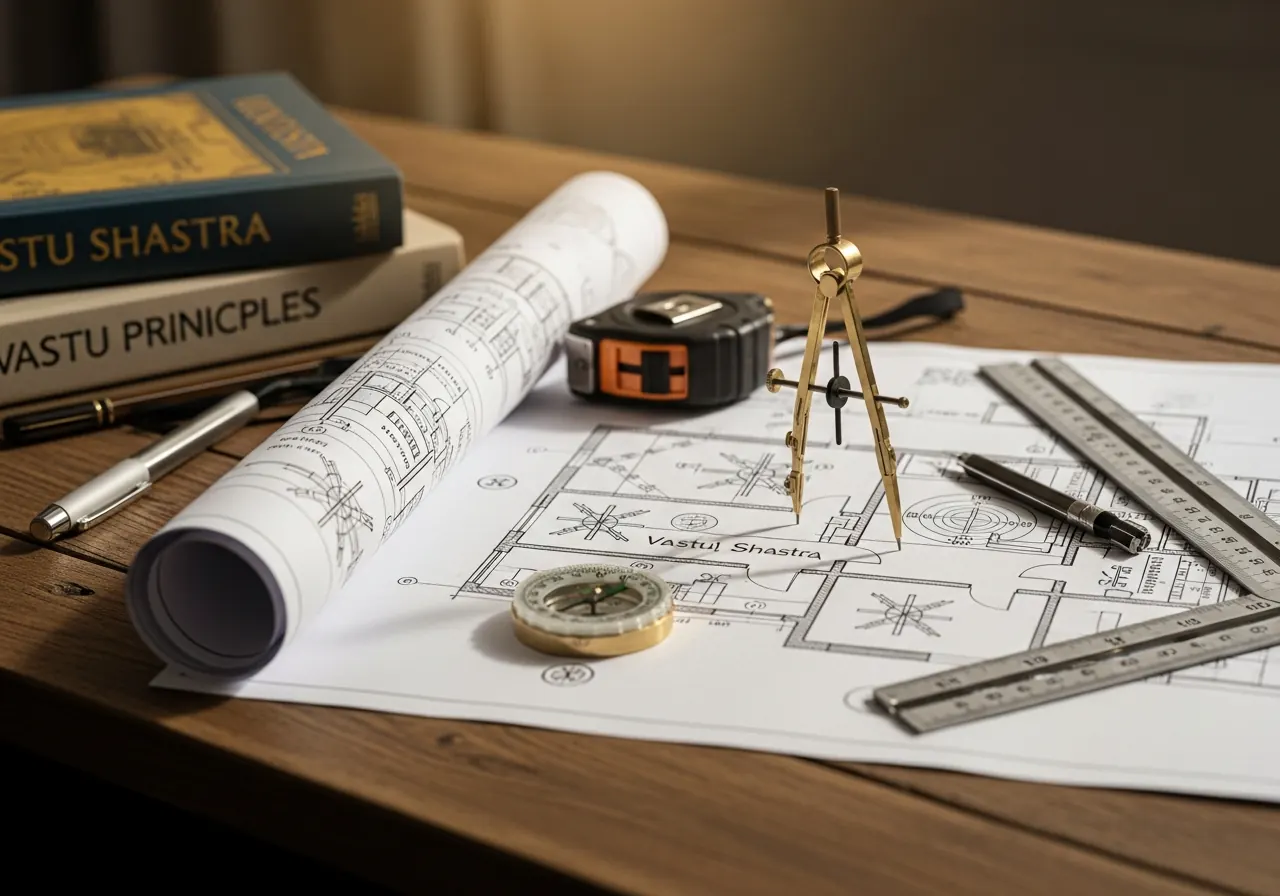
Every Vastu assessment Alok carries out starts in the same place: the north-east corner. Whether it is a one-bedroom flat in Mumbai, an office in Dubai or a shed outside Palghar, this is the zone the tradition discusses first.
Vastu Shastra is a traditional belief system rather than a science, and what follows is what the classical tradition holds about this zone — not a statement of physical fact. Outcomes vary and nothing here is a guarantee.
What the north-east is
In Vastu the north-east is called Ishanya, after Ishana, a form of Shiva. It sits where north meets east — the two directions the tradition associates with prosperity and with beginnings respectively — which is why classical texts treat it as the most significant zone in a building.
Why the tradition emphasises it
Classical Vastu developed in the northern hemisphere, where the north-east is the side of a building that receives early morning light. The texts place prayer rooms, water and open space there, and the traditional reasoning ties the zone to clarity and to the start of things.
You will see this zone described elsewhere as working for scientifically proven reasons. It is more honest to say that this is a long-standing traditional principle, consistently applied, and that people follow it because they find it meaningful — not because it has been demonstrated in a laboratory.
What the tradition says activates it
Keep it light and keep it empty. That is almost the whole instruction. The tradition favours:
- Open, uncluttered floor space
- A water element — a small fountain, a bowl or a glass of water
- A prayer, meditation or quiet corner
- Light colours and good natural light
What the tradition says weakens it
Weight and water going out, rather than water standing. In the traditional reading the north-east is weakened by heavy furniture, built-in storage and lofts, a staircase, and above all a toilet — which classical texts treat as one of the more serious placements to find in this zone.
This is extremely common in modern flats, because builders place the service shaft where it suits the structure. It is a finding, not a catastrophe, and it is precisely what remedies exist for.
Non-demolition remedies
If your north-east has a toilet, a staircase or a wardrobe in it, nothing needs to be broken. The traditional remedies for a weakened zone work through placement and material: copper or pyramid strips at the perimeter, colour correction, keeping the space scrupulously clean and dry, salt, and lightening whatever weight can be moved elsewhere.
Which of these applies depends on your specific layout, which is the honest limit of what any article can tell you.
Questions people ask
It is a common finding in modern flats and it is treated with non-demolition remedies rather than structural change. Anyone telling you it requires demolition should be asked why.
They are looked at together. The entrance tends to dominate the discussion of a home, and the north-east is where the zone-by-zone reading begins.
Not quite. A water element is one traditional measure among several, and it is the clearing-out of weight and clutter that usually does more.
Vastu Shastra and Vedic Astrology are traditional belief systems, not sciences. Outcomes vary from person to person and nothing is guaranteed. See our disclaimer.