Property & Plots
Checking a Plot for Vastu Before You Buy

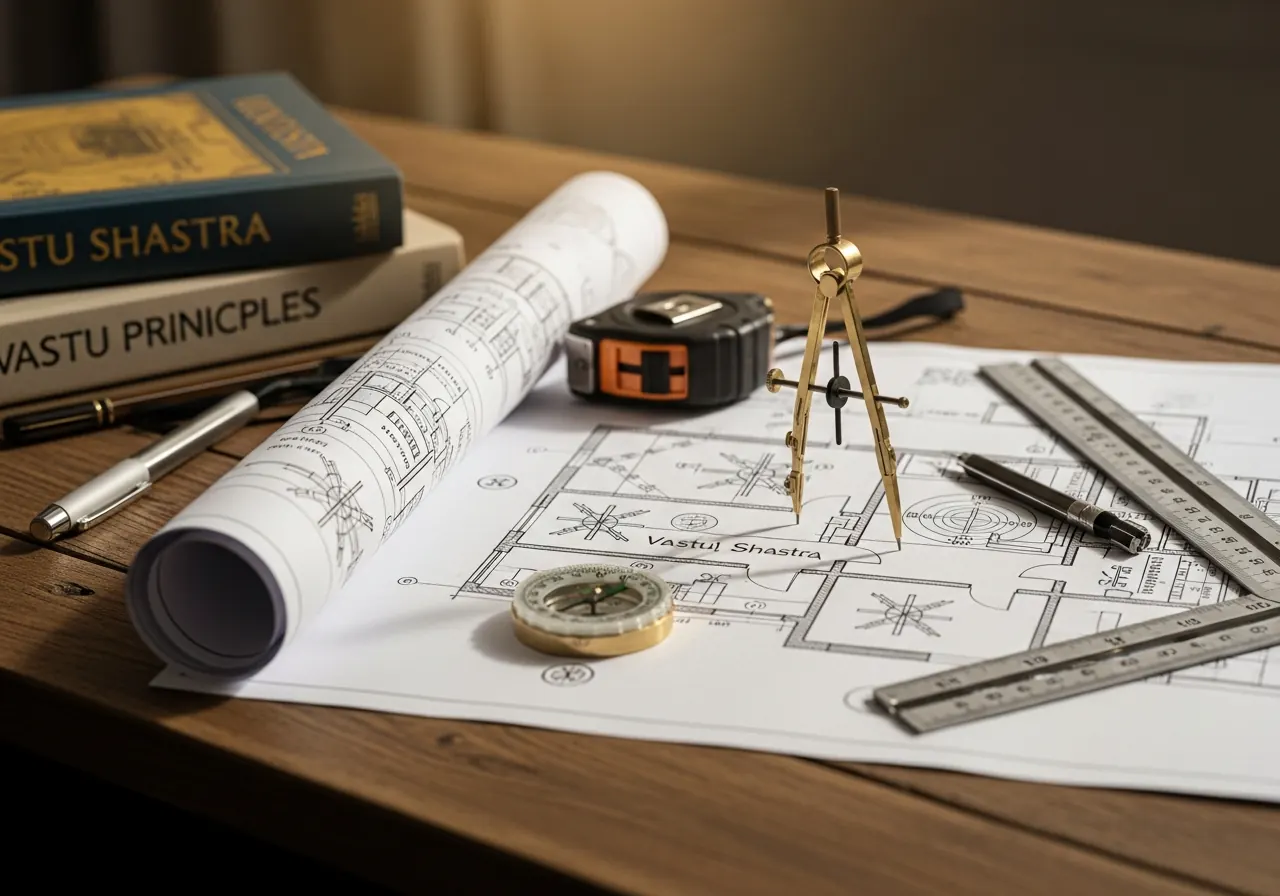
A plot is the cheapest point at which to think about Vastu. Nothing is built yet, so the entrance, the kitchen and the staircase can still go anywhere. Once the slab is cast, the same decisions cost far more to change.
Vastu Shastra is a traditional belief system, not a science. What follows is what the tradition looks at. Outcomes vary from person to person and nothing here is a guarantee.
Shape and corners
The tradition prefers square and rectangular plots, because every direction is fully present. Irregular shapes are read by which corner is missing or extended. A cut in the north-east is treated more seriously than an extension there; a cut in the south-west is the opposite.
An irregular plot is not automatically a bad buy. It often means planning the building on the regular part and using the rest for parking or garden.
Slope and level
The traditional preference is for land that is slightly higher in the south and west and lower towards the north and east, so that rainwater drains towards the north-east. A slope the other way can usually be corrected with filling and levelling before construction, which is far easier on an empty plot than later.
Roads and the entrance
Which sides the road touches decides where the gate and main door can go. A road ending straight at the plot (veedhi shoola in the tradition) is discussed carefully; whether it matters depends on which side and which part of that side it hits.
Corner plots are read by which two roads meet. In Mumbai and Palghar, where many plots have only one road side, the choice of gate position along that side is often the main decision.
What surrounds the plot
Tall buildings, high-tension lines, water bodies, temples, burial grounds and heavy industry nearby are all part of the traditional reading. In practice the question is usually where the building can sit on the plot so that these affect it least.
The checks Vastu does not replace
A Vastu reading says nothing about whether a plot can be legally bought or built on. Before paying any token amount, get the title checked by a lawyer. In Maharashtra that usually includes the 7/12 extract, the mutation entries, non-agricultural (NA) permission where it applies, the development plan and any encumbrances.
If those checks fail, a good Vastu reading doesn't make the plot worth buying.
How a plot check works
Send the plot's dimensions or a sketch, the location pin, which sides touch roads and a few photos. If you are comparing two or three plots, send all of them: each is checked on the same points, and you are told which issues can be handled in the building's design and which come with the land. Site visits are arranged across Mumbai, Palghar and the surrounding areas, and anywhere in India.
Questions people ask
Not by itself. What matters is where the gate and main door sit along that side and how the building is planned on the plot. Many south-facing plots are planned without trouble.
Often, through where the building is placed and how the leftover area is used. The report explains which part of the plot to build on.
Both before paying anything, but the legal check decides whether you can buy at all. Vastu helps you choose between plots that are legally sound.
Vastu Shastra and Vedic Astrology are traditional belief systems, not sciences. Outcomes vary from person to person and nothing is guaranteed. See our disclaimer.